water

It’s been said that the fate of any great movement is to be cannibalized by the mainstream or to die.  I’d like to suggest two others paths:  zombiehood and courageous re-invention.

Zombiehood is a mode of living death in which people mindlessly repeat old advocacy forms that clearly aren’t working.  This is the fate of much environmentalism today – a professionalized, bureaucratized sector that is afraid of taking risks, innovating or defying respectable opinion.

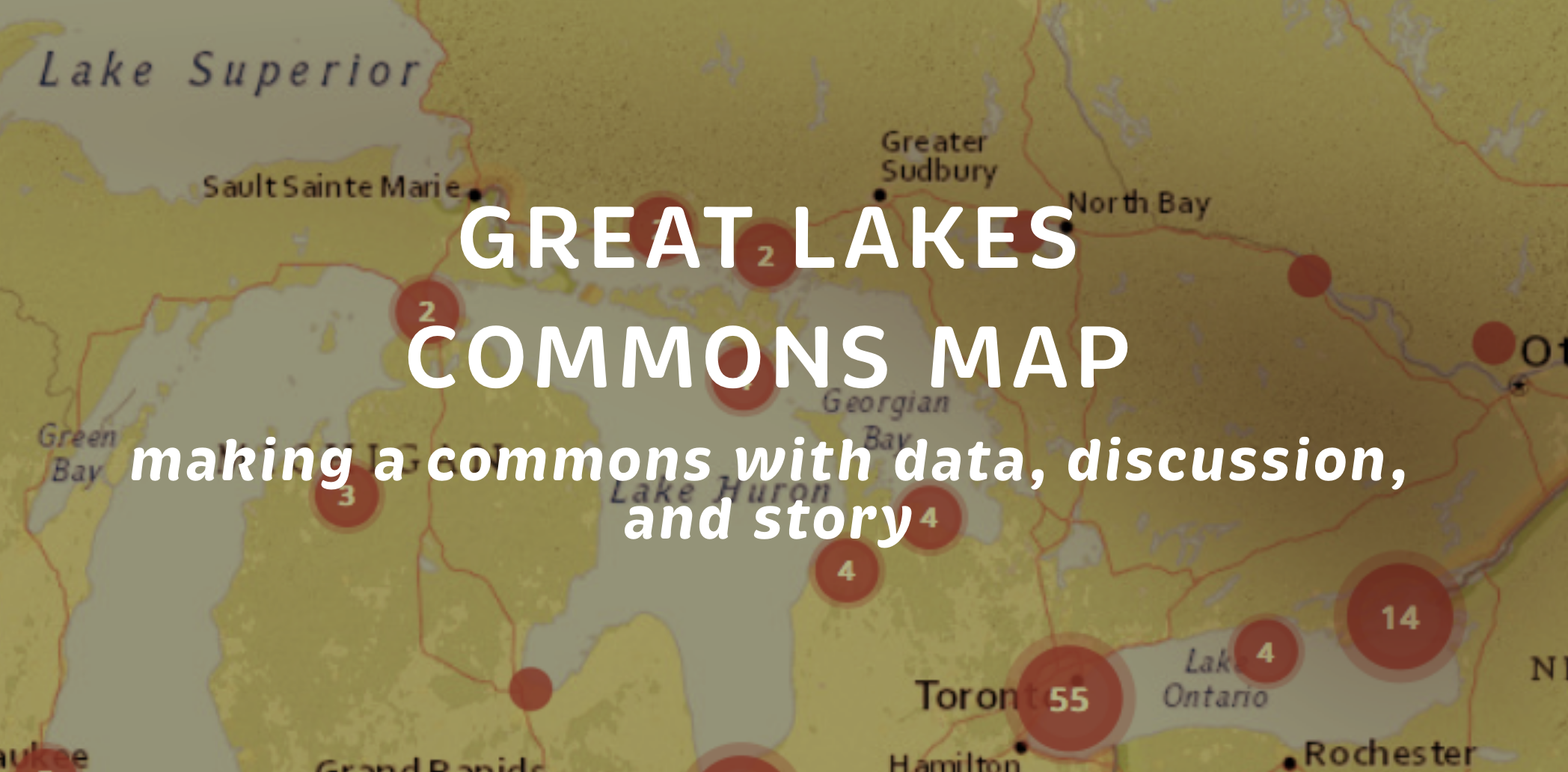
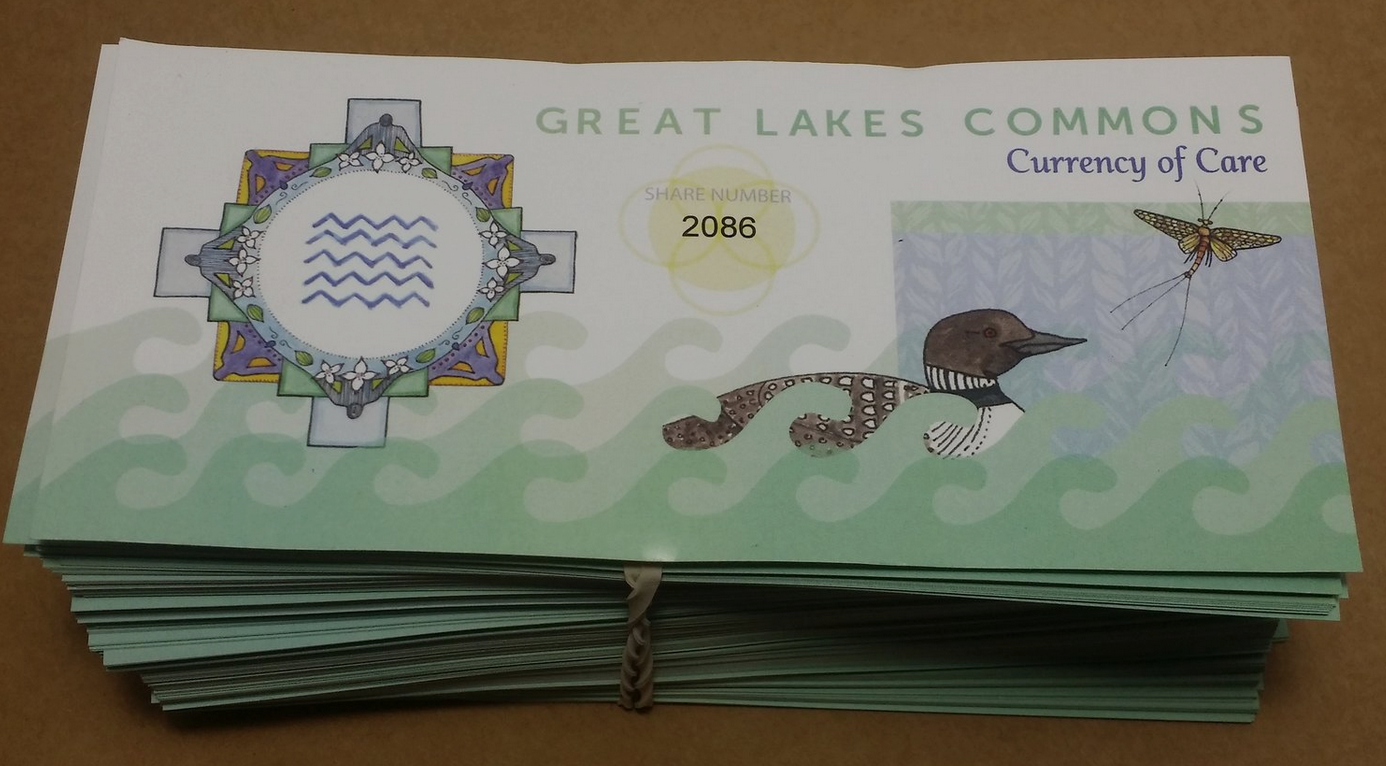
It is refreshing, therefore, to recognize a notable departure from zombie-environmentalism, the Great Lakes Commons, a new cross-border grassroots campaign catalyzed by On the Commons to establish the Great Lakes as a commons.  Here is a bold idea with the nerve and intelligence to strike off in some new, experimental directions without any assurance that it’s all going to turn out.

For the past 40 years, environmental activists have looked to legislatures, regulators and international treaties to “solve the problem.”  Guess what?  It’s not working.  Governments are too corrupt, corporate-dominated, bureaucratic or just plain stalemated.  The Great Lakes Commons is an attempt to launch a new narrative and activist strategy based on some very different assumptions.  It’s trying to organize people in new ways, through commoning, and to imagine new forms of governance that will actually protect the Great Lakes.  It doesn’t just want to raise money and collect signatures for petitions.  It wants to nurture new types of human relationships with this endangered regional ecosystem.

As the Great Lakes Commons website points out, Great Lakes policies are biased toward private and commercial interests.  The political management regimes do not reflect ecological realities.  And the people living near the Lakes are treated as bystanders who have little power to affect government decisionmaking.  For all these reasons and more, the ecological health of the Great Lakes has deteriorated over the past several decades, and now there are new threats from hydro-fracking, radioactive waste shipments, copper-sulfide mining and invasive species. 

The Great Lakes Commons Map

A week or two ago, I blogged about the rise of new sorts of eco-digital commons that blend virtual spaces with environmental management.  It's a bit of serendipity to learn this week about the a fascinating new online tool, the Great Lakes Commons Map.  The map is an interactive platform that solicits contributions and conversation by people who love the Great Lakes.  The idea is to turn a resource that is often seen as belonging to no one into one that is actively stewarded by everyone.  How?  By inviting everyone to post their own videos, text, photos and comments about specific portions of the Great Lakes.  Over time, it is hoped that the site will help build a new shared “mental map” and shared space for people to talk about the Great Lakes as an integrated bioregion -- and to take action to defend it.

The map was created by Paul Baines, an environmental educator, and Darren Puscas of reWORKit (“web production for unions and social change”).  Here is Haines' video introduction to the map.  Haines hopes that the website will help people annotate their conservation projects, cleanups, ecological education and restoration initiatives, activist efforts, walking tours, historical markings, and other Great Lakes projects on a single site, and thereby illustrate how and why the Lakes are a commons.  Anyone can post their own personal stories, reports of threats to the Lakes' ecological health, alerts that seek to organize and educate, notices about upcoming events, etc. 

Haines eventually hopes to make it possible to post and share video and audio on the site; use SMS and Twitter feeds for reporting and campaigning; host workshops and training on community mapping; and translate the website into other languages. 

What’s especially beautiful about the site is its use of Ushahidi, an open source, interactive geospatial platform for the crowdsourcing of information in crisis situations.  The platform has been used to enable the geospatial visualization human trafficking, for example.  Haines adapted it to serve as a way to crowdsource information, images, video and more that can create a new shared cultural space for saving the Great Lakes.

How does commons activism differ from conventional political action, and how might it transform the very practice of democracy and governance?  In a must-read essay, Tommaso Fattori explains how several voter referenda in Italy on June 12 and 13, 2011 validated the commons.  He describes how the votes – two to prevent privatization of water management – represent a stunning repudiation of the market/state duopoly and its anti-democratic “public/private partnerships” to carve up the commons.

Fattori's essay is called “A CounterStrike Strategy: Fluid Democracy – Story of the Italian Water Revolution”; it originally appeared in the Rome-based review Transform! in September 2011. (I located the article on the website for Social Network Unionism, a group dedicated to “a peer to peer, transnational commons, and hyperempowered labour class movement.” Thanks for the alert, Michel Bauwens!)

The June referenda were a shock to the Italian political and corporate establishment because voters resoundingly rejected laws that privatized water, supported nuclear power and granted special legal immunity to the Prime Minister and other government officials. It bears noting that Italian referenda can only repeal existing laws that are disliked; they cannot write new ones. That makes the results even more remarkable. With more then 57% of the eligible Italians voting, each of the four referenda received 94% or more of the vote!

While common lands and waters are being stolen by investors and developers the world over, the Supreme Court of India decided it was not going to look the other way.  In a bold, surprising ruling, the Court made a sweeping defense of the commons as commons. 

In the January 28 decision, the Court held that the enclosure of a village pond in Rohar Jagir, Tehsil, in the State of Punjab, by real estate developers was a totally illegal occupation of the commons.  The developers, who were appealing a lower court ruling, had filled in the pond with soil and started building houses on it.  The Court ruled in unmistakable terms that the pond/land must revert to the commoners immediately and the illegal occupiers must be evicted.  Even more remarkable, the Court held that similar enclosures of common lands elsewhere in India must be reversed even if they have been in effect for years.  (Thanks, Trent Schroyer, for alerting me to this case!)

You can read the 12-page decision by Markandey Katju here [pdf file].  Given the ideological capture of American jurisprudence, it is astonishing and inspirational for me to encounter a no-nonsense affirmation of the rights of commoners by the highest court of any nation.

The Rural Commons of India

The Foundation for Ecological Security (FES) is a pioneering advocate of the commons in India, especially on behalf of the poor.  At the recent conference of the International Association for the Study of the Commons in Hyderabad, which FES co-hosted, the organization displayed a series of posters that make clear the commons is a vital resource for survival and ecosystem stability in India.  I found the posters so captivating that I asked for copies of the images so I could share them here.  Each comes with the following tagline....


....and each features photos and short statements about why and how the commons helps poor communities.  Here are some of the posters: 


Water Flowing Underground

No one complains about the convenience of getting water from the tap, but there is something deep within us that loves drawing fresh water from the ground, the way generations of humans have done. Is it the special taste? The cool moistness of that spot of ground? Or is it the wondrous mystery that hovers around a well?

Photographer Kay Westhues of South Bend, Indiana, became so entranced by the continuing appeal of artesian wells — water that flows naturally from the ground, and usually routed through a pipe — that she created a website, Well Stories about "our relationship with the water we drink." The sites features photos of old artesian wells in the Midwest, and gather stories from the people who make their own personal meccas to gather water from the wells.

As Westhues explains on her website:

Who Owns the River?

The property rights crowd just can’t seem to comprehend that ownership rights are not absolute. Property doesn’t exist in a vacuum, but in a social, ecological context. The latest installment of this long-running drama is the controversy between private landowners in Gunnison, Colorado, and river-rafting outfitters that take people down the river.

The question at hand: Are the rafters violating the private property rights of landowners when they float down the river?

Historically, under the public trust doctrine of most state’s laws, the water in river and lakes belongs to everyone, and can be accessed through public rights of way. However, as the New York Times reported on April 16, it seems that they are some ambiguities about the scope of private landowner rights in Colorado. The water belongs to the public, but the river and lake beds and banks belong to the people who own the adjacent land.

Syndicate content