Seed sharing has been a venerable tradition since the dawn of agriculture. Sharing has been a way of honoring the renewal of life, developing new seedlines, and maintaining a farmer’s independence while helping other farmers.Modern capitalism, armed with new technologies and legal powers, has savaged this tradition of seed-sharing, with disastrous results.
For the past several decades, large biotech corporations have aggressively engineered seeds and the design of seed markets to make them proprietary monopolies. This has had profound consequences for farmers and global agriculture: legal bans on seed-sharing, a loss of biodiversity, less innovation in seed breeding, and higher prices that threaten sustainable agriculture and the economic sovereignty of farm communities, especially in the Global South.
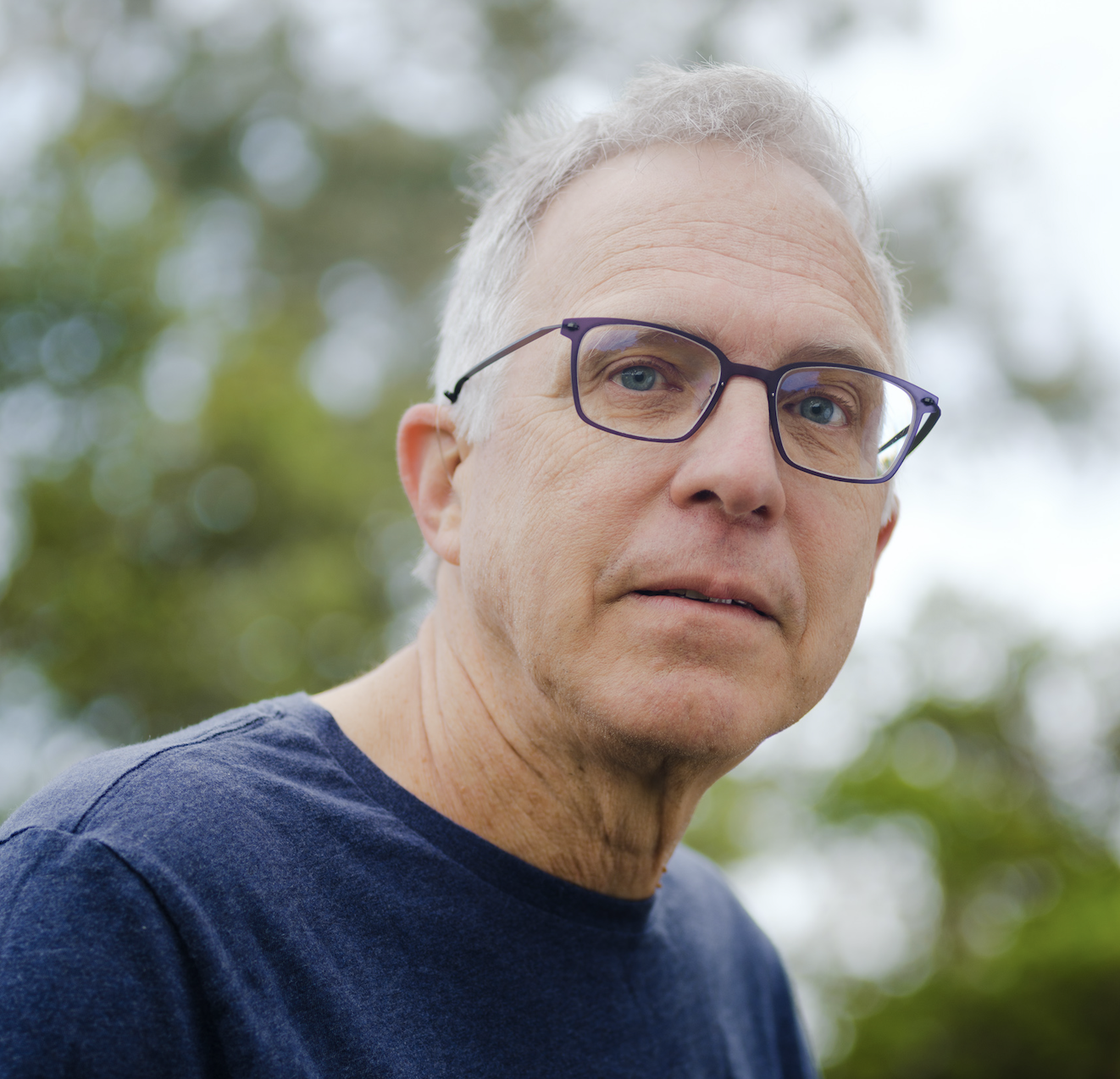
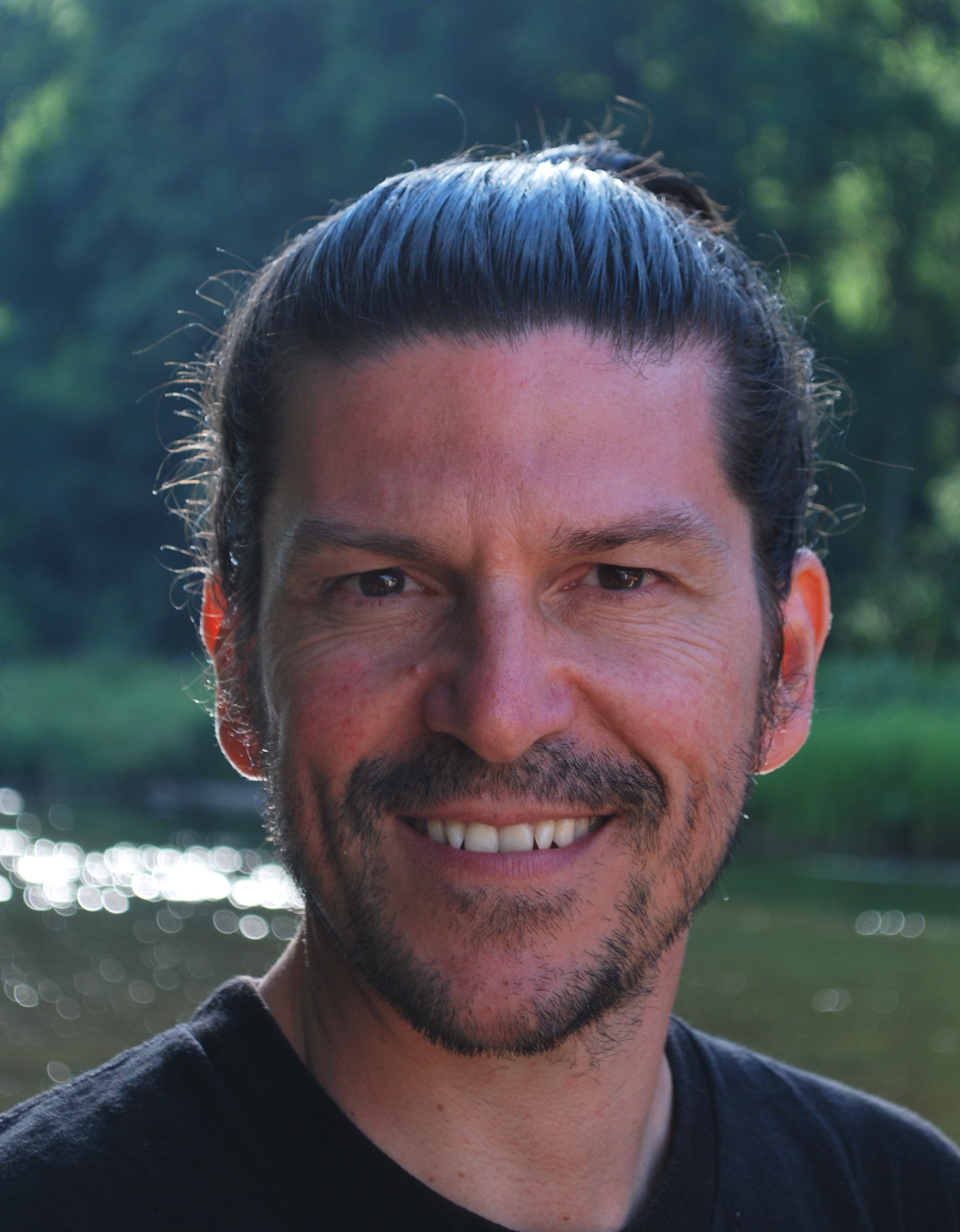
Professor Jack Kloppenburg of Open Source Seed Initiative
As a professor at the University of Wisconsin, Madison, since 1985 (he’s now a professor emeritus), Kloppenburg has been at the forefront of seed-sharing issues for forty years. His 1990 book, First the Seed, was a pioneering look at the political economy of plant biotechnology, a theme that he later explored in Seeds and Sovereignty, about the corporate capture of genetic resources.
I delivered the following remarks last week at the Oxford Real Farming Conference, in Oxford, England, on January 5, 2024. It was part of a session in the Oxford Town Hall with the noted British activist-scholar-commoner Guy Standing, entitled, "Commons and Commoning: A Progressive Vision of a Good Society."
Below is my prepared text. A video can be found here (starts at 3:35 timecode). Guy Standing's excellent talk, reflecting a British perspective and themes from his books, The Blue Commons and The Politics of Time, can be found at the same link (starts at 30:30 timecode). There is audience Q&A with Guy and me following our talks.
Established systems don't welcome fundamentally new ideas – even when they desperately need them, even if people are clamoring for them. Entrenched systems see new ideas and logics as disruptive. They see them as threatening and even incomprehensible.And yet, as Albert Einstein famously said, "Problems cannot be solved with the same mindset that created them."
We're at an impasse today because contemporary institutions keep bringing the same mindset to solving problems that need some fresh and strikingly different approaches. The many problems afflicting agriculture and the food system today are fundamentally similar to those afflicting the rest of society. They are just another theater for rentier capitalism, which relies on market/state collusion, extractivism of nature, and systemic precarity for many ordinary people.
I don't want to denigrate the need for critique because the prevailing market/state system must be properly understood in all its awfulness. But what we most need is creative experimentation in developing a new, more wholesome paradigm. So my remarks will focus on how we can make some ambitious, creative leaps forward, and how the commons – as a discourse, social practice, ethic, and worldview – can be very helpful in meeting this challenge.
To glimpse an inspiring vision of farming in a post-capitalist environment – one that is in communion with the Earth and its aliveness – look no further than Soul Fire Farm in the Hudson Valley of New York. The 80-acre farm, run by a remarkable Afro-Indigenous-centered community, has pioneered a socially minded agriculture dedicated to regenerating the land and empowering African-Americans and Indigenous cultures.It's a vehicle for training new farmers, feeding people who don't have access to healthy food, and "rabble-rousing for systems change."
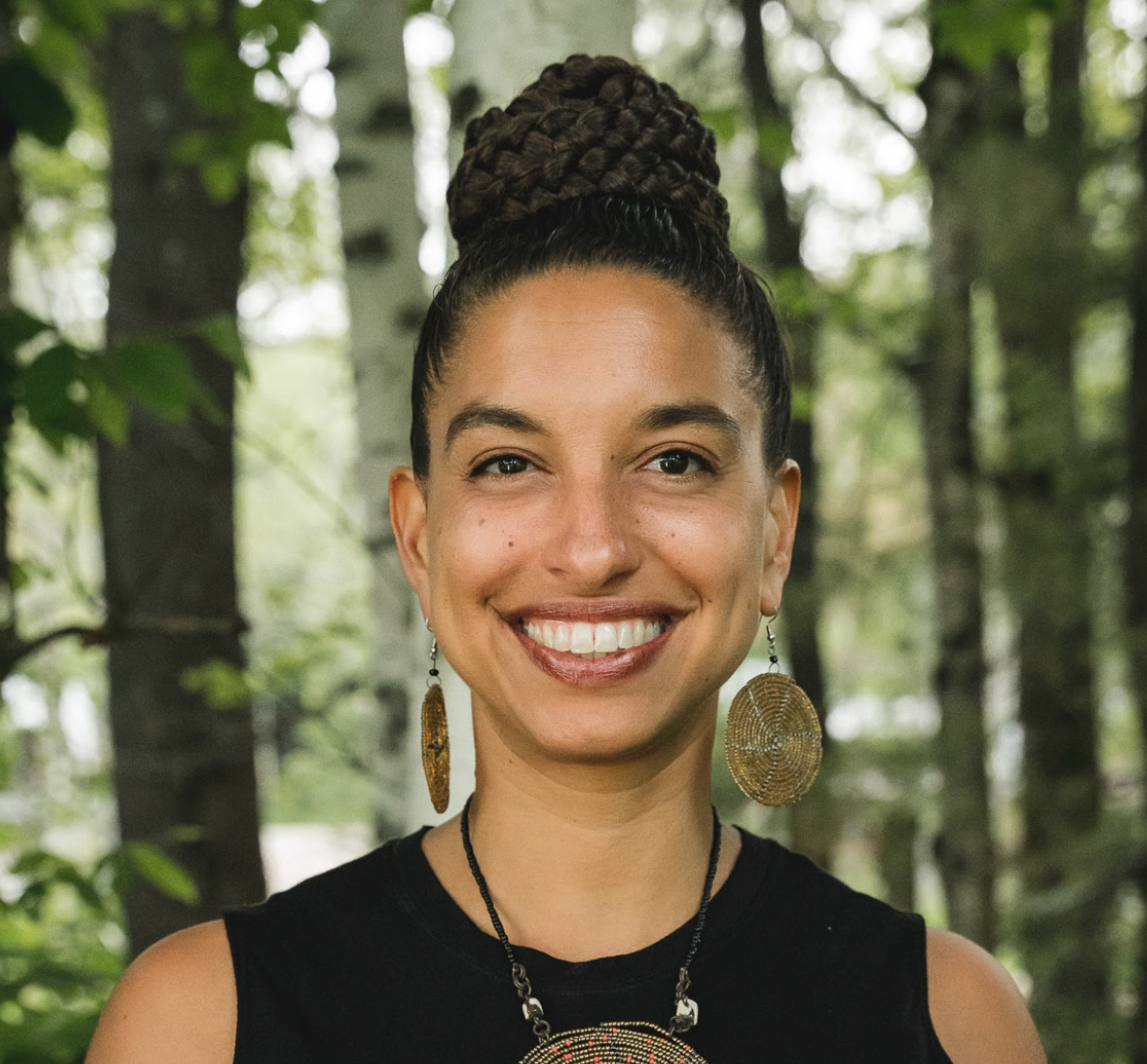
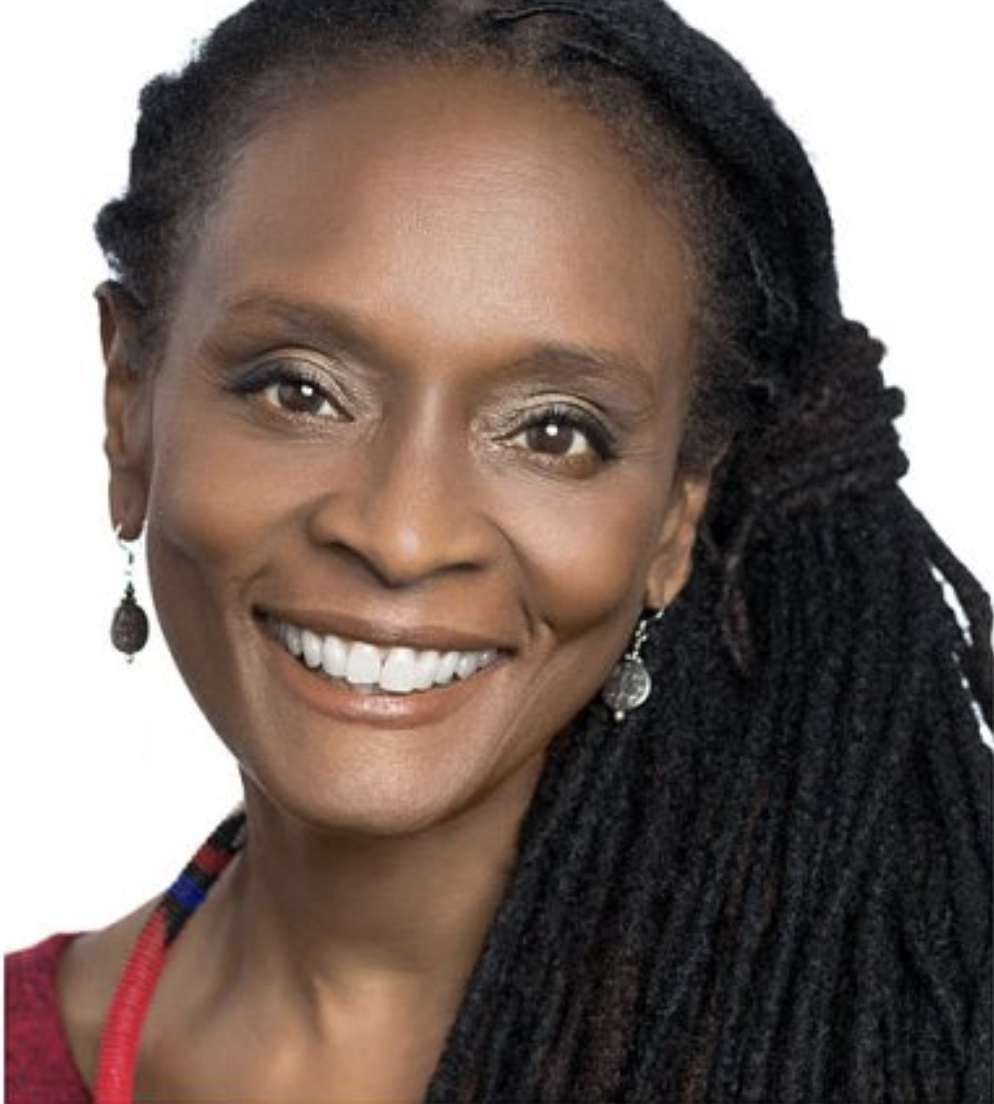
Leah Penniman, Cofounder of Soul Fire Farm
Leah Penniman, a Black Kreyol activist-farmer, cofounded Soul Fire Farm in 2010. She described her journey from science teacher to farmer in her 2018 book Farming While Black -- a manifesto and practical guide to "liberation on the land." Now Penniman moves beyond some of the practical "how to" issues of farming to explore the cultural and spiritual wisdom that has sustained African American agriculture for generations.
Her new book, Black Earth Wisdom, describes itself as "love songs for the earth and its people." It consists of sixteen captivating conversations between noted Black elders in a variety of fields, including author Alice Walker, ornithologist J. Drew Lanham, attorney Savi Horne, farmer Chris Bolden-Newsome, and musician Toshi Reagon, among many others.
Dorn Cox is a family farmer who has long been in the vanguard of improving regenerative agriculture with open source technologies. He sees participatory science and knowledge commons as powerful tools for improving agriculture in countless ways: crop yields, soil health, water usage, ecosystem resilience. All are especially needed in the face of climate change.
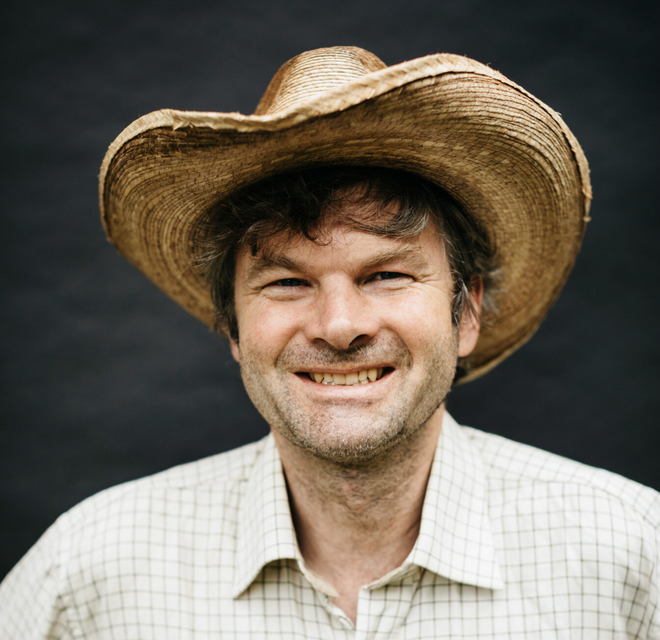
Dorn Cox, farmer and research director at Wolfe's Neck Center for Agriculture and the Environment
With a deep background in earth system sciences and a PhD in natural resources, Cox is a man of the soil – and the computer. He farms with his family on 250 acres in Lee, New Hampshire, and also serves as research director for the Wolfe’s Neck Center for Agriculture and the Environment in Freeport, Maine. But Cox is also deeply immersed in open source communities dedicated to developing technologies to strengthen small farms and local agriculture.
He is a founder of the farmOS software platform, a web-based app for farm management, planning and record-keeping. He also helped organize Farm Hack, an open source hardware project that designs and builds agricultural equipment. More recently, Cox has helped develop the Open Technology Ecosystem for Agricultural Management – called OpenTEAM – which is a farmer-driven collaborative community dedicated to improving soil health and addressing climate change.
For African-American farmers -- afflicted by the legacy of slavery, racism, and land theft -- the struggle for emancipation has not been easy. I was therefore excited to learn about Jubilee Justice, a fledgling project that is trying to reclaim farmland for BIPOC farmers and secure their economic livelihoods. Besides embracing cooperatives and community land trusts, Jubilee Justice is dedicated to an open-source, climate-friendly type of rice farming and to courageous "transformational learning journeys" for racial healing.
Konda Mason, cofounder & president of Jubilee Justice
Mason, cofounder and president of the Louisiana-based Jubilee Justice, is a long-time activist, social entrepreneur, and mindfulness teacher. Raised on social justice values by a farm family east of Los Angeles, she later cofounded the annual COCAP (Community Capital) conference in Oakland, which brings together progressive finance people to showcase new models of restorative economics and finance.
With Jubilee Justice, Mason decided that it is essential to confront issues of race and class as they manifest in land ownership, economics, culture, and our spiritual lives.
One way that the project does this is by helping reclaim land stolen from African Americans over the decades. There is a long and ugly history in American life of whites using various subterfuges – the legal power of eminent domain, discriminatory US Department of Agriculture lending, legal trickery, and more – to cheat African Americans out of their land.
How is it possible that extreme hunger and food abundance coexist in today's world? Why is it that food, one of the most fundamental necessities of life, is so scarce for so many people even though the global food system produces so much and wastes so much? These questions have long bothered Jose Luis Vivero Pol, an anti-hunger activist, agricultural engineer, and advocate for treating food as commons.
Studying the reasons for persistent hunger amidst plentiful food, Vivero began to see that the real problem is our societal treatment of food as a commodity -- an object valued by its market price and traded in global markets. The presumption that food should be a commodity departs from millennia of human history in which societies found ways to share food and ensure that people had enough to eat. Treating food as a commodity inevitably means that millions of people worldwide will not be able to afford food and therefore must go hungry or eat nutritionally degraded, unhealthy food.
Vivero Pol works as a PhD Research Fellow of Food Transitions at the Université catholique de Louvain, in Belgium. He realizes that attempting to decommodify food is a long-term proposition that requires a structural rethinking of our food system. But he emphasizes that food-as-a-commodity is an artificial social construct, not the natural order of life.
Indeed, food commons have been the norm throughout human history, and even in today's hyper-marketized world they remain widely prevalent. In many countries of Europe, the amount of land still managed as commons for growing food is 20 or 30%. In Iceland, 40% of land is still managed as commons.
It’s a bit odd that land reform is barely mentioned in most progressive agendas. Maybe that's because it is seen as challenging the presumed virtues of private property and capitalist markets. Yet secure access and tenure to land is essential for achieving so many progressive goals, from building new sorts of regional food systems to providing affordable housing and enabling local self-determination and personal well-being.
Severine von Tscharner Fleming put it well in the latest episode (#10) of my podcast Frontiers of Commoning: “At the root of peace is sufficiency and wholeness, and that means people having their needs met, people being fed. And that sufficiency and wholeness can be achieved only through a certain level of sovereignty over land and self-determination that is rooted in land.”
Severine is a young organic farmer, activist and organizer based in Maine who has had a remarkably productive career as an advocate for young farmers and land reform. She helped start Agrarian Trust, an organization dedicated to supporting land access for the next generation of farmers. In recent years, Agrarian Trust has started ten Agrarian Commons in the US, in an attempt to make community-supported, collectively stewarded farmland available to younger farmers. As the project notes: “With 400 million acres of land in the U.S. expected to change hands over the next two decades, the time for transformation in land ownership is now.”
Agrarian Trust is just one of many new ventures that Severine has helped set in motion. She also played a key role in starting Greenhorns, a grassroots cultural organization that produces a literary journal, radio show, blog, and other media for young farmers. She helped launch Farm Hack, a project that designs and builds farm equipment using open source principles.
More recently, Fleming pulled together Seaweed Commons, a network of people concerned about seaweed aquaculture and intertidal commoning. The project is focused on improving “the ecological literacy of stakeholders in the marine economy.” The challenge includes preventing toxic algae blooms, capturing the runoff of nutrients from salmon pens around the world, and ensuring ethical, environmentally responsible cultivation of seaweed for biofuels and aquaculture.
I don't normally post long essays, but I want to share this terrific piece by Maywa Montenegro de Wit on the struggle to create a socio-legal class of seeds can be shared.This mode of seed usage prevailed throughout most of history, of course, but as major ag-biotech corporations have aggressively pushed proprietary and genetically modified seed, seed-sharing and breeding among farmers has become marginalized and sometimes illegal. This has made farmers more dependent on expensive seeds and industrial farming techniques with harmful ecological impacts. It has also discouraged traditional agricultural practices that work with nature in which seed is shared and improved upon through commoning.
Montenegro isan assistant professor in the Environmental Studies Department at the University of California-Santa Cruz. Her work draws on political ecology, science and technology studies, and rural sociology to address issues of seed diversity and access to it.
This essay appeared in the recently published anthology, The Great Awakening: New Modes of Life amidst Capitalist Ruins, which I co-edited with Cardiff University professor Anna Grear. More about the book at Punctum Books, which published the collection of essays under a Creative Commons Attribution-ShareAlike license, with both print and PDF versions available.
1. Introduction
C.R. Lawn knows what primitive accumulation feels like.[1] As founder of the Fedco Seeds cooperative, he saw fungicide treatments become ubiquitous in the 1980s, and decided to stop sell- ing seeds laced with the hazardous chemicals. In the 1990s, as GMOs came online, he placed a moratorium on the technology out of concern for unknown risks. Nine years later, when Monsanto bought out Seminis — Fedco’s largest supplier of vegetable seeds — Fedco began boycotting the company because, as Lawn explains, “we could not in good conscience sell their varieties.” The chemicals, the GMOs, and the patents, Lawn says, are part of a broader phenomenon: “We have privatized our common wealth in the hands of the few at the expense of the common good.”
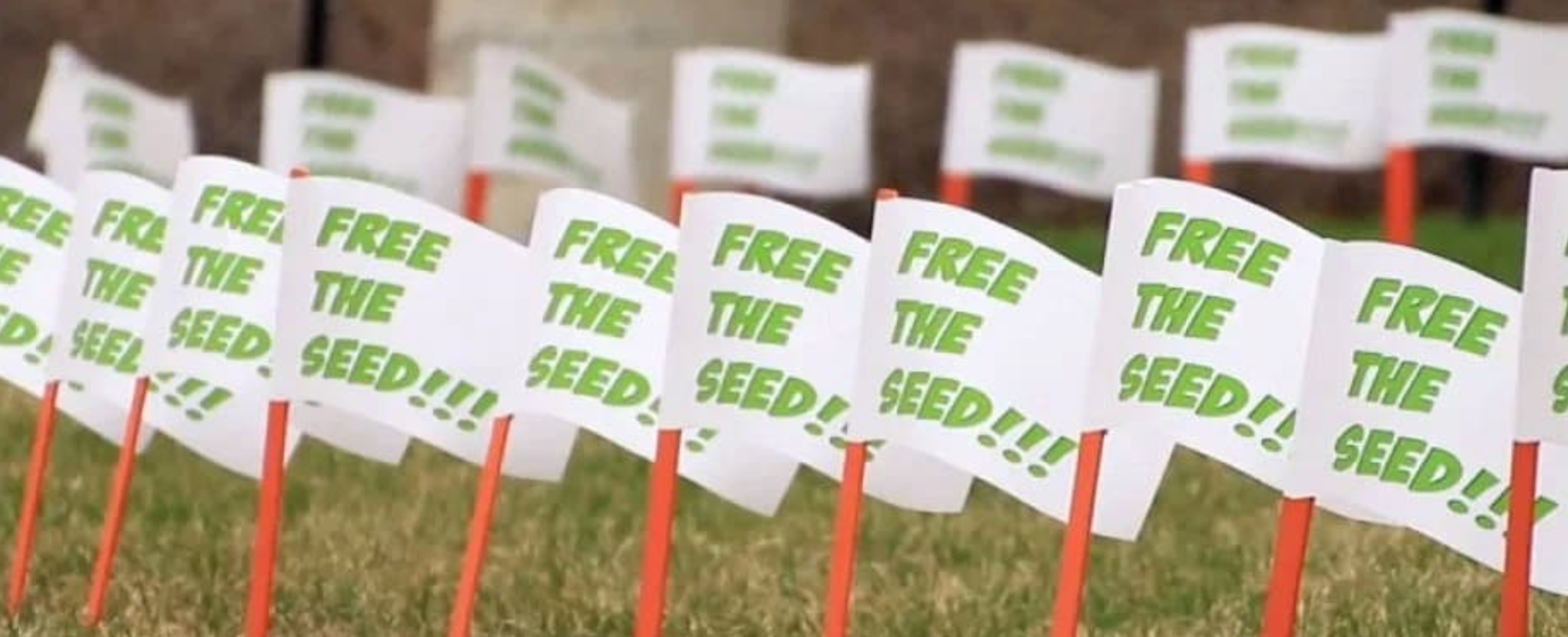
Source: Open Source Seed Initiative
C.R. Lawn and his Fedco growers and packers are not alone in these deliberate rejections of seed enclosures. They are part of a movement gaining traction in many parts of the world, Global North and South, that refuses to adopt the dominant wisdom: that agrobiodiversity is best managed as private property; that breeding innovation will not occur in the absence of patents, variety protections, and other intellectual property (IP) rights; and that “improved seeds” result from individual ingenuity, rather than from collective knowledge, gleaned in and through experience with the land. From India to Peru, France to the Philippines, social movements are now advancing a bold discourse of seed freedom, seeking to reclaim what has been appropriated, privatized, and separated from the everyday and practical experience of farmers and farmer-breeders.
This chapter traces a novel expression of seed freedom that emerges from something old: the concept of a “commons.” Conventionally defined as social or natural resources not owned by anyone, but over which a community has shared and equal rights, the commons go back many centuries in agrarian history, their enclosures marking a crucial juncture in the transition from feudalism to capitalism.[2] I add to the burgeoning new commons literature by looking at commons as a biocultural form, specifically in relation to seeds. Scholarly emphasis to date has been primarily on rules and institutions of resource management, following the principles of a well-governed commons.[3] My argument is that seeds turn our attention to the politics and practices of access to means of reproduction. We consider how community rules, values, and practices of making new seed varieties — or plant breeding — are at once driven and shaped by a larger political economic order. We explore how seed diversity is gained and/or lost through histories of legal, scientific, and biological enclosure.
Following recent contributions to commons scholarship, I emphasize commons as a living, dynamic field of practice — not simply a resource divided amongst people, but a social transformation developed in and through the practices of commoning.[4] Moving from noun to verb, this formulation also puts greater emphasis on the people and communities intrinsic to the commons — not just on the seed, but on farmers, seed savers, and plant breeders.
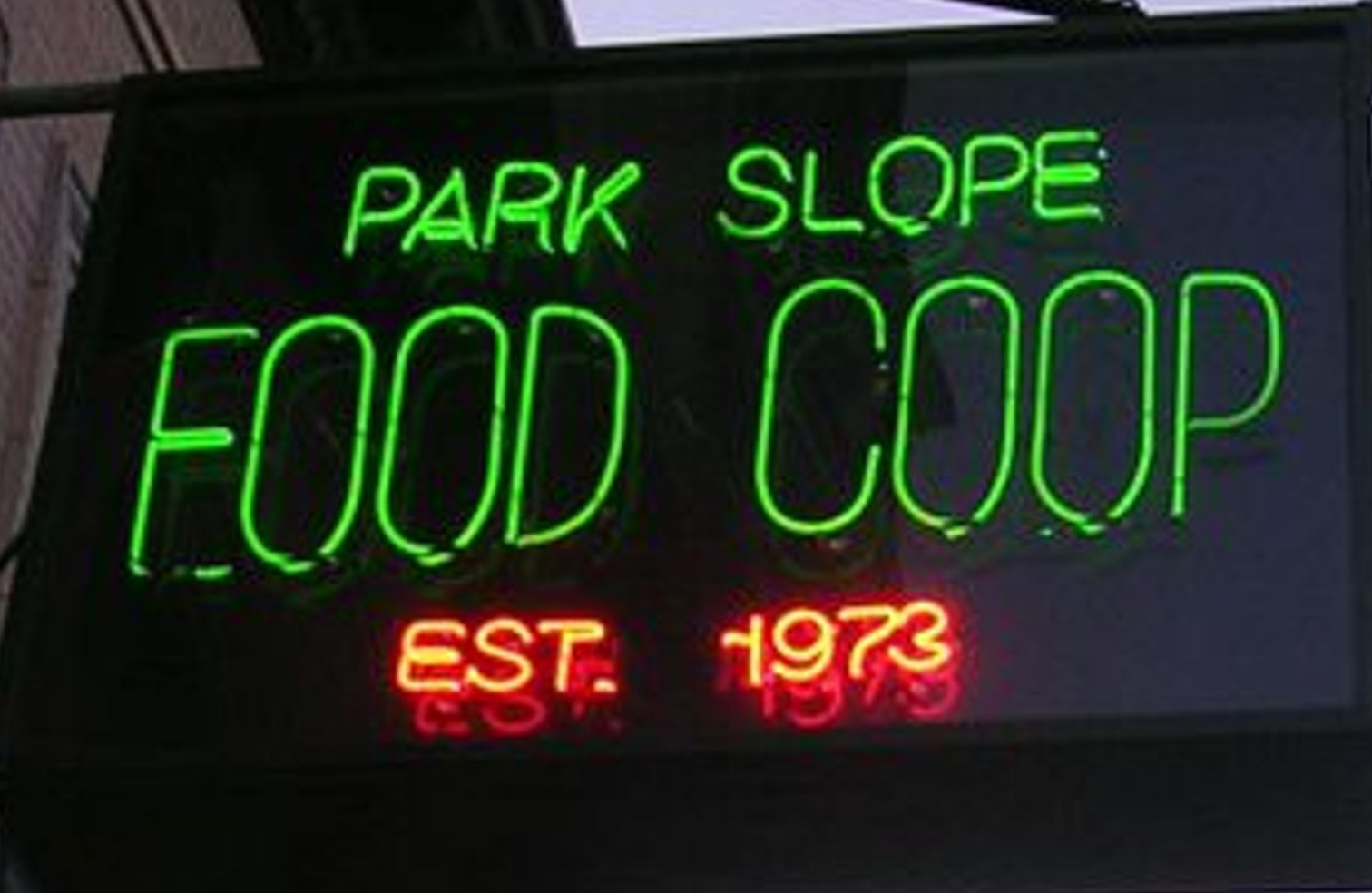
In the nearly 50 years since the Park Slope Food Co-op Brooklyn opened, it has become both legendary and taken-for-granted. People seem to forget that its success was based on heroic struggle and lots of difficult internal commoning. Many outsiders see a gilded precinct of New York City filled with affluent professionals, not realizing that the Co-op arose from within a funky neighborhood of ordinary people who wanted high-quality, affordable, responsibly produced groceries. And indeed, most of its members are still ordinary, middle-class New Yorkers.
A lengthy piece in The New Yorker magazine (November 25 issue) captures the complicated and colorful history of the Co-op magnificently. “The Grocery Store Where Produce Meets Politics,” by Alexandra Schwartz, dives deeply into the inner life of the Co-op and the people who both venerate it and condescend to it. The Park Slope Food Co-op is a landmark achievement of what can be achieved through commoning in a co-operative organizational structure.
The Co-op's most salient achievement may be its sheer scale. It has more than 17,000 members and annual sales revenues of $58.3 million. Yet it is still run as a participatory, democratically managed operation whose members actively care about eco-friendly agriculture and socially minded practices.
Unlike many co-ops that regard themselves as quasi-corporations competing in the market, perhaps with a nod to social concern, the Park Slope Food Co-op remains unabashedly committed to functioning as a commons. It is a self-help collective, as one of its leaders put it, not a do-gooder project.
In her early encounters with the Co-op, journalist Alexandra Schwartz found it “to be claustrophobically crowded, illogically organized, and almost absurdly inconvenient. In other words, it was love at first sight. Suddenly, on my editorial assistant’s salary, I was eating like an editor-in-chief.” The Co-op is not a sleek, modernist Whole Foods store with precious upscale touches. It’s a place where you can get fantastically fresh local produce, inexpensive cheese, and high-quality expeller-pressed cooking oils. Prices are generally 15% to 50% less than those of a conventional grocery store.







Recent comments