history

The Possibilitarians

The history of the Diggers in 1649 is the improbable basis for a dramatic production by the Bread and Puppets Theater, an experimental troupe based in Vermont that uses masks and puppets to entertain and educate people.  The troupe bills itself as providing “cheap art and political theater,” adding that it is “one of the oldest, nonprofit, self-supporting theatrical companies in the country.”

As reported by Greg Cook of WBUR, the Boston public radio station, the Bread and Puppets Theater recently produced a show called “The Possibilitarians,” a counterpoint to the reactionary Parliamentarians of the time.  The show was described as an “epic and raucous pageant” about the 17th Century English radicals called the Diggers, who were seeking to build an alternative order to the proto-capitalism of its time, protesting in particular the private ownership of land. 

The Diggers have been wonderfully chronicled by historians such as Christopher Hill (The World Turned Upside Down and Left-Wing Democracy In the English Civil War).  Of note is a recently published biography, Gerard Winstanley: The Diggers Life and Legacy (Pluto Press).

It’s great to see such history resurrected through an innovative kind of street theater.  The Bread and Puppets Theater was founded in 1963 by German immigrant Peter Schumann.  The troupe quickly became known for its massive papier-mâché puppets and for giving its audiences fresh baked break at the end of performances.  In the '60s and '70s the theater often mounted performances/protests against the Vietnam War and nuclear arms race, among other issues.  As WBUR put it, the Bread and Puppets Theater “vividly merged radical ‘60s theater with the alchemy and magic of traditional ritual, public pageantry and folk art.”

One of the games of childhood in the US, and in many other places around the world, is the board game known as Monopoly.  This classic board game pits players in a race to assemble monopolies of real estate so that they can charge higher prices and win the game by bankrupting their opponents.  Forming a monopoly is celebrated, along with the deceptions, predation and ruthlessness that any good competitor must show.  But hey, it's just a game! 

What is less well-known is the very different board game that preceded Monopoly and formed the basis for it.  The Landlord’s Game, as it was called, was originally conceived by actress Lizzie Magie in 1906.  She set forth a game in which people fought monopolies and cooperated to share the wealth.  The story of the true origins of Monopoly is masterfully told in the latest issue of Harper’s magazine by Christopher Ketcham.  “Monopoly is Theft” is the title of his article, which describes “the antimonopolist history of the world’s most popular game.”

Lizzie Magie was greatly influenced by Henry George, the author of the 1879 book, Progress and Poverty, who famously proposed a single tax on land as a way to fight unjustified monopolies of land.  She saw The Landlord’s Game as a way to popularize George’s teachings, especially the idea that no one could claim to own land.  As Ketcham writes, Henry George believed that private land ownership was an “erroneous and destructive principle” and that land should be held in common, with members of society acting collectively as “the general landlord.” 

The way that monopolies in land could be prevented – and the social value of land socialized for the benefit of all – was via a tax on land value. There was no need to overthrow capitalism; one need merely impose a single tax on land that would prevent monopolists from enjoying unearned, unfair "rents."  Ketcham provides a wonderful short history of Georgist thought and the great influence that it had in the late nineteenth century.  Henry George was celebrated by Leo Tolstoy, Mark Twain and John Dewey as one of the great reformers of his time.  He was also reviled by the Catholic Church, landlords and businessmen as more dangerous than Karl Marx.

In the latest issue of Stir to Action, John Gurney, an historian of the Diggers of the 17th century, has some fascinating perspectives on the Runnymede Eco-Village, a squatters encampment that began in June near the site where the Magna Carta was signed by King John.  In his essay, “The Diggers, the Land and Direct Activism,” Gurney reflects on the parallels between today’s encampment and a similar one that occurred in April 1649:

"It was in April 1649 that the Diggers, inspired by the writings of Gerrard Winstanley, occupied waste land on St George’s Hill in Surrey, and sowed the ground with parsnips, carrots and beans. For Winstanley, the earth had been corrupted by covetousness and the rise of privatge property, and the time was ripe for it tobecome once more a ‘common treasury for all’. Change was to be brought about by the poor working the land in common and refusing to work for hire. The common people had ‘by their labours … lifted up their landlords and others to rule in tyranny and oppression over them’, and, Winstanley insisted, ‘so long as such are rulers as calls the land theirs … the common people shall never have their liberty; nor the land ever freed from troubles, oppressions and complainings’. The earth was made ‘to preserve all her children’, and not to ‘preserve a few covetous, proud men to live at ease, and for them to bag and barn up the treasures of the earth from others, that they might beg or starve in a fruitful land’ – everyone should be able to ‘live upon the increase of the earth comfortably’. Soon all people – rich as well as poor – would, Winstanley hoped, be persuaded to throw in their lot with the Diggers and work to create a new, and better society. To Winstanley, agency was key, for ‘action is the life of all and if thou dost not act, thou dost nothing’.

….Digging lasted for just over a year from April 1649. The Surrey Diggers abandoned their St George’s Hill colony in the summer of 1649, after having succumbed to frequent assaults and legal actions, and by late August they had relocated to the neighbouring parish of Cobham. Here they remained until 19 April 1650, when local landowners brought hired men to destroy their houses and burn the contents and building materials. New Digger colonies had, however, sprung up elsewhere, inspired by the Surrey Diggers’ example and by Winstanley’s extraordinarily rich body of writings.

Chomsky on the Commons

Noam Chomsky recent gave a meaty talk, “Destroying the Commons:  On Shredding the Magna Carta” that shows how fragile the rights of commoners truly are. Achieved after enormous civil strife, the Magna Carta supposedly guaranteed commoners certain civic and procedural rights.  A companion document, the Charter of the Forest later incorporated into the Magna Carta, expressly guarantees commoners stipulated rights to access and use forests, land, water, game and other natural resources for their subsistence. 

Both documents are now being shredded today with barely a peep of acknowledgment that centuries-old principles of human rights are being swept aside.  Much of Chomsky’s talk is dedicated to his familiar critiques of US geopolitics and corporate globalization.  But he has a few illuminating passages about the Charter of the Forest and modern-day enclosures, especially in the global South.  Chomsky gave the speech at the University of St. Andrews in Scotland. 

Citing Linebaugh’s book, The Magna Carta Manifesto, Chomsky writes:

The Charter of the Forest imposed limits to privatization…. By the seventeenth century, however, this Charter had fallen victim to the rise of the commodity economy and capitalist practice and morality.  

With the commons no longer protected for cooperative nurturing and use, the rights of the common people were restricted to what could not be privatized, a category that continues to shrink to virtual invisibility.  In Bolivia, the attempt to privatize water was, in the end, beaten back by an uprising that brought the indigenous majority to power for the first time in history.  The World Bank has just ruled that the mining multinational Pacific Rim can proceed with a case against El Salvador for trying to preserve lands and communities from highly destructive gold mining.  Environmental constraints threaten to deprive the company of future profits, a crime that can be punished under the rules of the investor-rights regime mislabeled as “free trade.” And this is only a tiny sample of struggles underway over much of the world….

Diggers 2012 Set Up Camp at Runnymede

In development that feels strangely like kismet, an encampment of dispossessed young people who wish to opt out of the corporate system and reclaim a basic freedom of working the land, have made their way to Runnymede, a hallowed site in the history of the commons. 

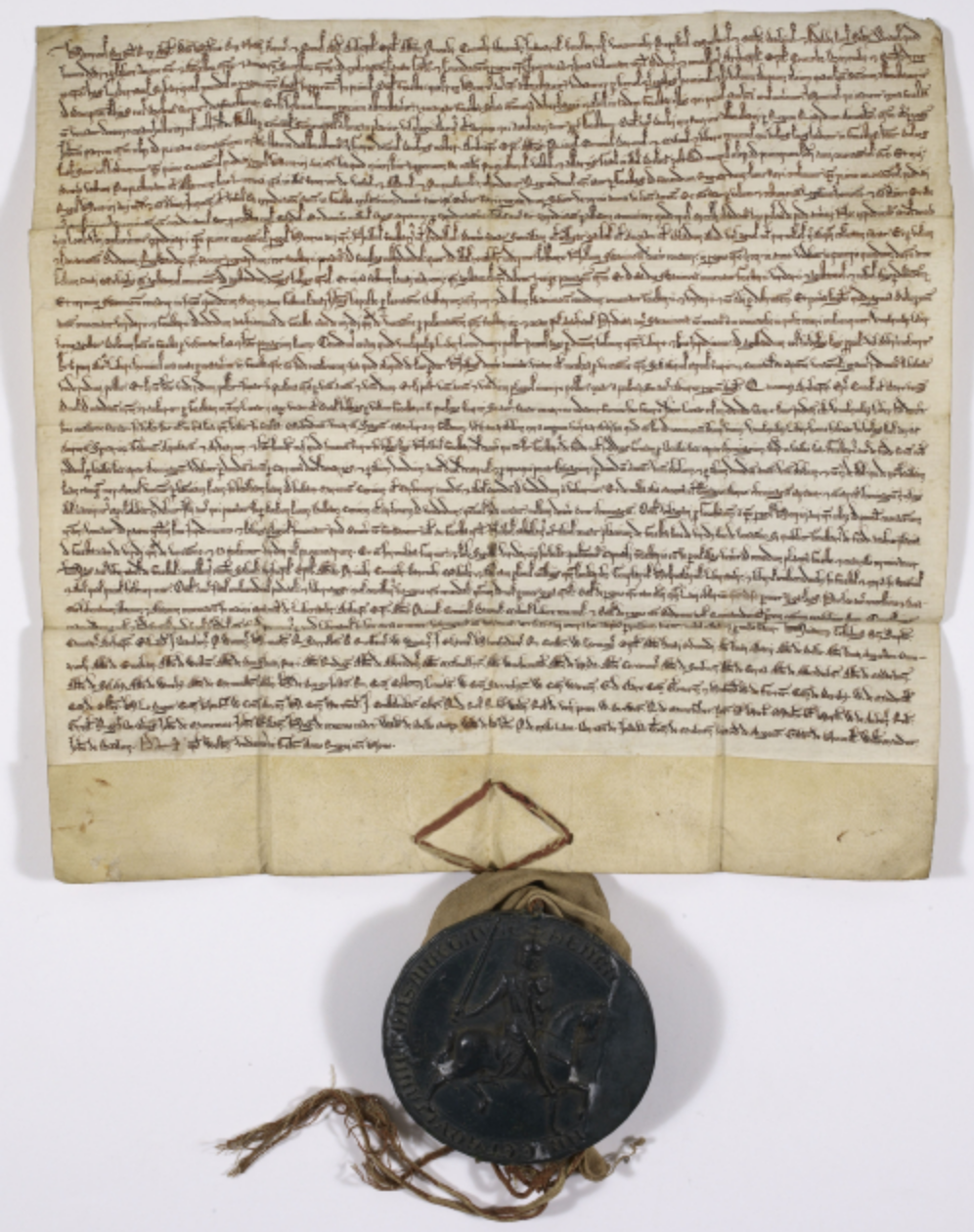
Runnymede is where King John signed the Magna Carta in 1215, settling the long civil war with barons and commoners, and leading to the Charter of the Forest that granted explicit commoning rights to commoners.  Runnymede is therefore an appropriate place for contemporary Occupy-style encampments.  It's where the king formally recognized that he was not above the law, and that the commoners have rights that must be respected.  But history and king-like proxies have papered over such truths.  (Peter Linebaugh's Magna Carta Manifesto is THE book to read on this subject.)

A group that calls itself Diggers 2012 is now trying to engineer a rendezvous between that past and a commons-directed future.  After being forced out of their encampments in London, the Diggers are now establishing their own Runnymede Eco Village. (Thanks for the alert on this news, James Quilligan!) The Diggers want to secure their own right to the land and to develop their own autonomous system for self-governance and subsistence.  Some want to create a banner, "We don't want workfare, we want landshare!"

After being shooed from one place to another, and suffering the destruction of their plantings, the Diggers decided to set up camp at Brunel University’s Runnymede campus, which has gone unused for six years and is poised to become a construction site for apartments.  In The Guardian, columnist George Monbiot has a wonderful column about the encampment at Runnymede, which he described as “a weed-choked complex of grand old buildings and modern halls of residence, whose mildewed curtains flap in the wind behind open windows, all mysteriously abandoned as if struck by a plague or a neutron bomb.

The Diggers are off on an out-of-theway, unused piece of land. Not exactly a prime location on which to attract attention.  But they are nothing if not determined to make a point and build another world. As one camper explained:  “Like our forbearers, ‘The Diggers’ of the mid 17th Century, we too will face the same forms of oppression as we attempt to make use of the disused land. And like the Diggers, we are committed to continuing our mission to make use of the disused land in the face of brute force. So if the bailiffs come, we may go, but we may too come back and keep coming back. For you can tear down our structures and rip out our crops, but you cannot kill the spirit of our vision. We are not here to fight anyone. We know in our hearts that our activities are just and reasonable. So we will carry on.”

A thousand-year-old tradition of farming commons in southern England may be jeopardized as housing prices drive out farmers and render the commoning rights moot.  Yes, there are still self-identified commoners in England.  BBC radio recently interviewed a handful of the remaining commoners who rely upon the New Forest in Hampshire to feed their cattle, sheep and chickens.  The 23-minute radio report focused on how the farming commons is a way of life that has preserved the distinctive ecological landscape – and how this future is now in doubt.

New Forest is said to be the largest remaining tracts of unenclosed pasture land, healthland and forest in the southeast portion of England.  The land became a royal forest in 1079 when King William I shut down 20 hamlets and isolated farmsteads, provoking an uproar.  He then consolidated the land into a single tract, the New Forest, which he used for royal hunts. 

The traditions of commoning in the New Forest are quite involved and detailed, as Wikipedia notes:

Commons rights are attached to particular plots of land (or in the case of turbary, to particular heaths), and different land has different rights – and some of this land is some distance from the Forest itself.  Rights to graze ponies and cattle are not for a fixed number of animals, as is often the case on other commons. Instead a marking fee is paid for each animal each year by the owner. The marked animal's tail is trimmed by the local agister (Verderers’ official), with each of the four or five Forest agisters using a different trimming pattern. Ponies are branded with the owner's brand mark; cattle may be branded, or nowadays may have the brand mark on an ear tag.

Students of the Declaration of Independence are often told that Jefferson changed John Locke’s classic formulation of the phrase “life, liberty and property” to the more transcendent “life, liberty and the pursuit of happiness.”  This is usually attributed to Jefferson’s high-mindedness.  Now I learn from Bruce Littman, who is associated with the Burlamaqui Society in Geneva, Switzerland, that there may have been a more calculating political motive behind this change. (A top o' the hat to Rolf Carriere.)

According to the Society – a private dining club that organizes “pursuit of happiness” dinner debates – Jean-Jacques Burlamaqui (1694-1748) is “best remembered for his attempt to demonstrate the reality of natural law by tracing its origin to God's rule as well as to human reason and moral instinct.  He believed that both international and domestic law were and should be based on this kind of “natural law.” 

The Society states:

Now that Google has digitized millions of books, the next logical step is to sift through those books for interesting patterns of thought.  Enter Google NGram Viewer, now in beta, which can identify how many times a specific word or phrase appears in millions of books over certain time periods.  The digitized books can be searched in a variety of languages – American English, British English, French, German, Hebrew Spanish Russian, Chinese.

This fascinating new tool enables one to identify certain crude trends about the ideas floating around in published books, which may be a proxy for what was on the minds of educated people.  The raw data begs for us to make educated guesses about why certain words spike -- or disapear -- during certain time periods.  (Thanks, Jim Boyce, for bringing this to my attention.)

So what happens when “commons” and “public goods” is put into Google’s magic database machine?  You get the following chart:

Every few months I find myself circling back to writings by Ivan Illich, the iconoclastic Catholic priest who decried the institutionalization of life and the great promise of “vernacular domains” as a source of regeneration.

I came back to Illich this time via a chapter about him in a book by Trent Schroyer, Beyond Western Economics:  Remembering Other Economic Cultures (Routledge, 2009).  The chapter is easily one of the most illuminating things I’ve read about Illich and his critiques of modernity.

The vernacular domain, as Illich calls it, is the realm of everyday life in which people create and negotiate their own sense of things – how they should educate themselves, how they should embrace their spirituality, how they should manage the resources they need and love.  Vernacular culture consists of those spaces that exist for self-determination in the broadest sense of the term.  As Schroyer puts it:

Coming to terms with the commons means a willingness to learn a new language and the alien worldview that it makes possible.  That is one of the great lessons that I have gleaned from reading histories of English commons and the enclosure movement. 

I realized this anew upon reading an essay by historian Peter Linebaugh, “Enclosures from the Bottom Up,” in the December 2010 issue of Radical History Review.  (Alas, the essay is locked behind a paywall, but fortunately, a website called “Envisioning a Post-Capitalist Order:  A Collaborative Project” -- which Radical History Review has a hand in – has posted a downloadable pdf version of the essay here.)   

Linebaugh -- the great scholar of the commons and author of The Magna Carta Manifesto (University of California Press, 2006) – has a way of conjuring up entire ways of knowing that have disappeared.  I was struck by two passages describing the folkways of commoners. The first links “body-snatching” with the commons, a conjunction that made me start.  It turns out that, amidst a civil rebellion in Otmoor, near Oxford, England, in the 1830s, a rallying cry of the commoners was “Damn the body snatchers!” 

Syndicate content