
John Thackara on Designing for Life
John Thackara is one of the brilliant irregulars exploring how humankind can make the transition to a climate-friendly, relocalized, post-capitalist world. You can't pigeonhole him in any occupational category or disciplinary tradition because he is so effortlessly transversal. He blends his broadly international and nonsectarian perspective with the many particular projects that are Building the New.
This helps explain why Thackara's work is so appealing: It speaks to us as whole human beings where we live, in distinctive local circumstances. While rigorous and empirical, Thackara isn't constrained by the jargon and norms of a particular discipline or theory. Like so many designers, he lives on the messy creative edge where interesting new things are always emerging. (Check out his website at thackara.com.)
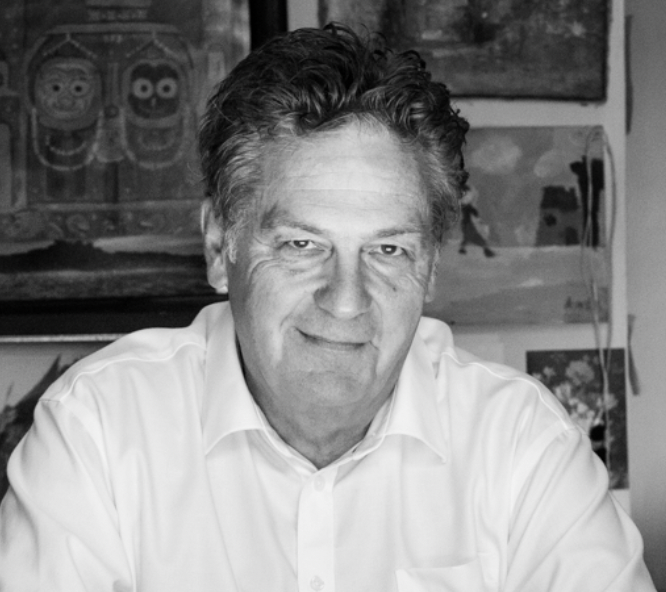
On my latest episode of Frontiers of Commoning (Episode #34), John and I have a spirited conversation about the things preoccupying him these days: how to design for bioregional, post-capitalist economies; the many local projects that are quietly making a new world; and corporate subterfuges such as "net zero," carbon offsets, and the financialization of nature.
Thackara, a Brit who lives in the south of France, has taught at major universities in Japan, China, and Italy, and held prominent posts at the Netherlands Design Institute and the Royal College of Art in the UK. Now an independent writer, activist, and designer, John avoids arid abstractions; he prefers to document the practical alternatives to capitalism popping up all over.
- Read more about John Thackara on Designing for Life
- Log in or register to post comments


 The point of a world electrical grid is to re-engineer hub-and-spoke transmission networks designed for central power plants so that electricity can be easily transmitted between daytime to nighttime regions of the world, and between the Global North and South. The infrastructure would make it more feasible for countries to rely on renewable energy because the grid would solve the problem of intermittent energy flows (no solar energy can be generated at nighttime; the wind is not always blowing).



Recent comments